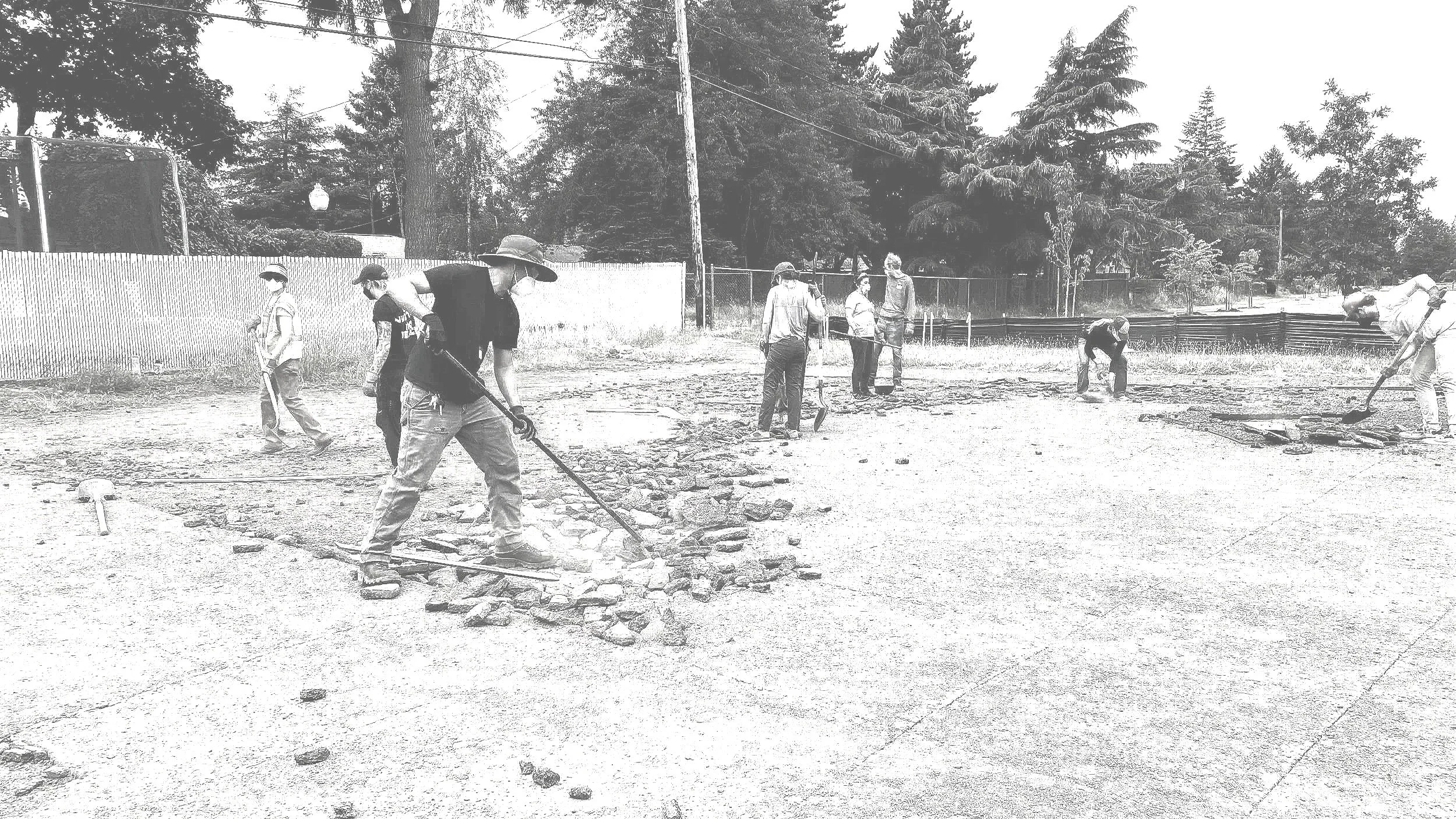
Depaving removes unnecessary pavement because healthy cities make room for life.
Unnecessary pavement prevents rain from reaching the soil, trees from growing, neighborhoods from cooling, and communities from adapting to climate change. Depaving removes that barrier. It is the first act of restoration—the moment when infrastructure makes room for living systems that support people, nature, and future generations.
WHY DEPAVE?
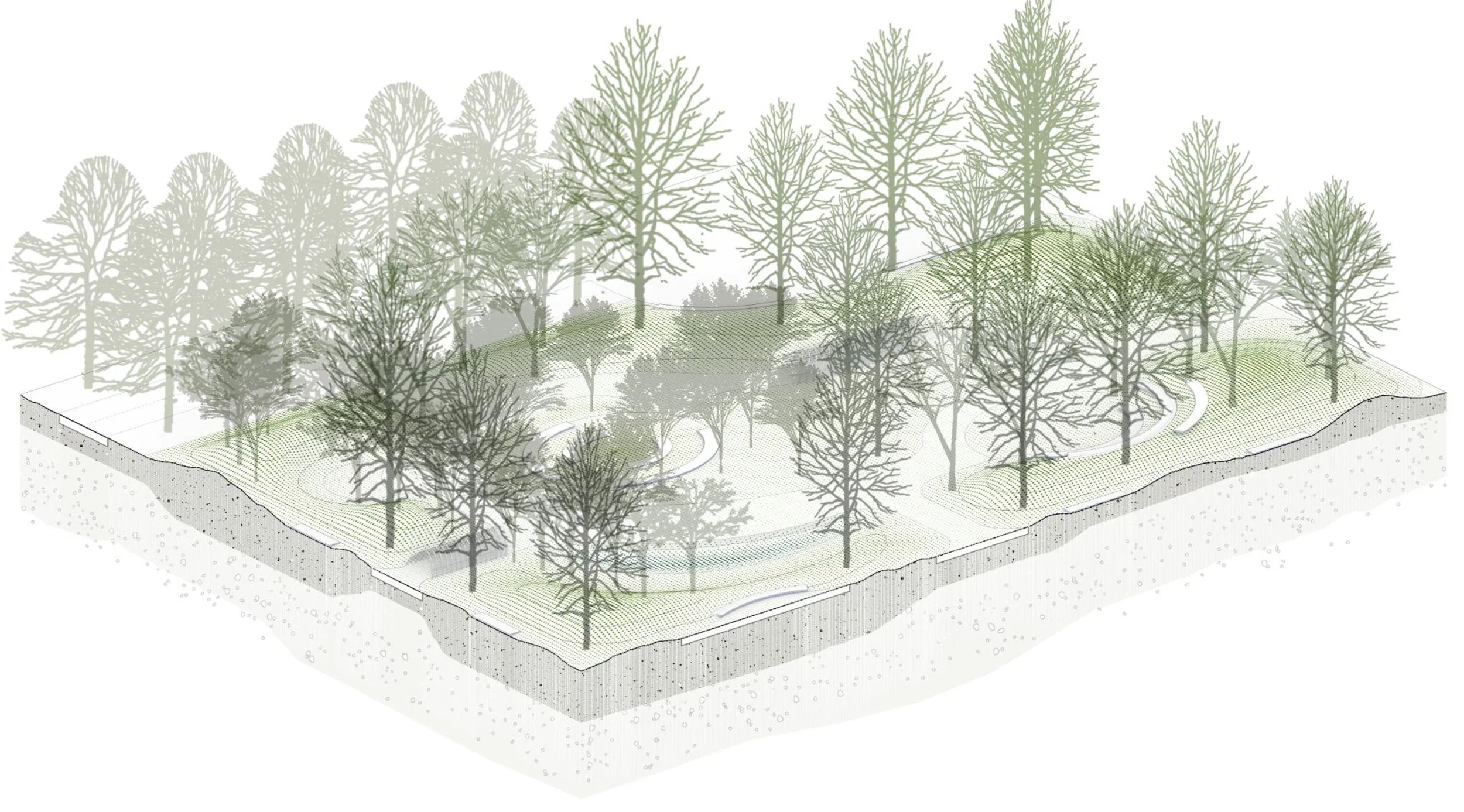
Flooding Depaving restores the ground's ability to absorb rain instead of sending stormwater into overwhelmed sewers and flooded neighborhoods.
Extreme Heat Depaving replaces heat-absorbing asphalt with trees, shade, and vegetation that cool neighborhoods naturally.
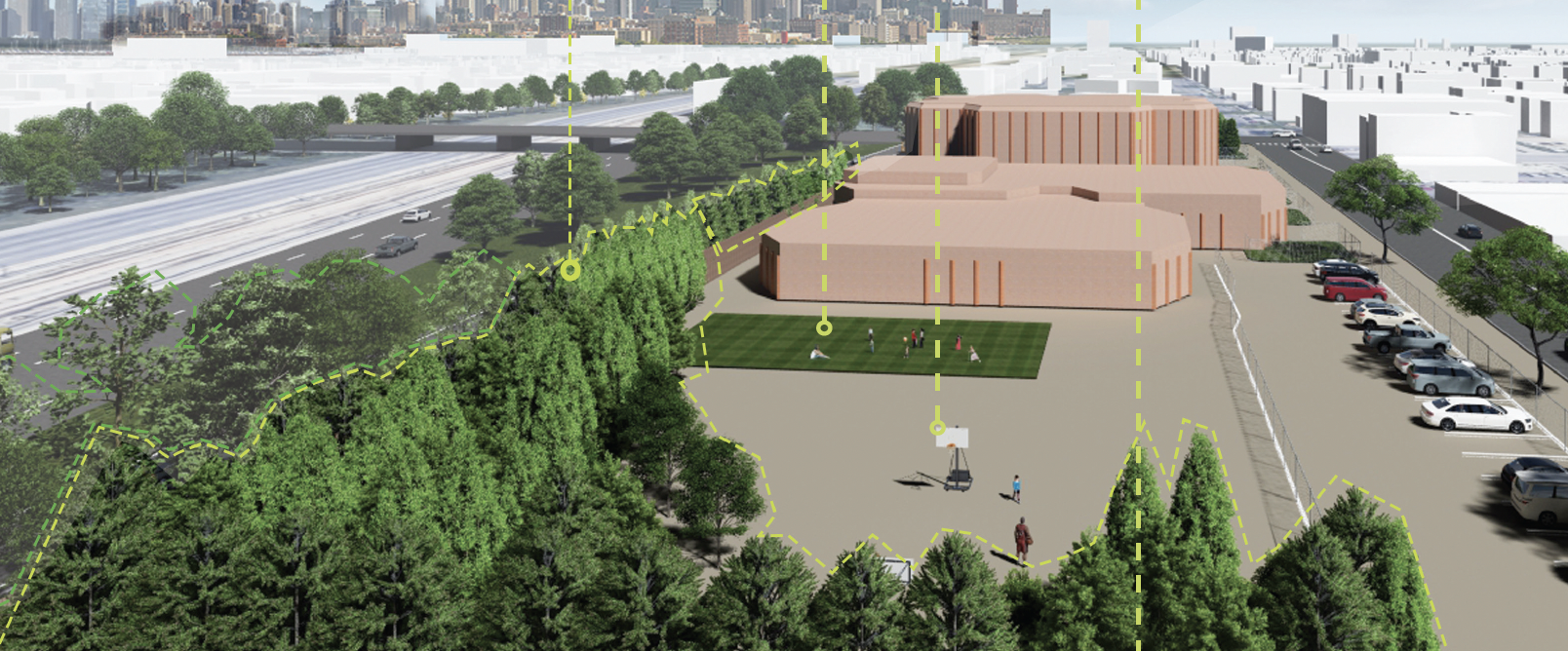
Health Depaving reduces pollution, improves air quality, expands biodiversity, and creates healthier places to learn, play, and gather.
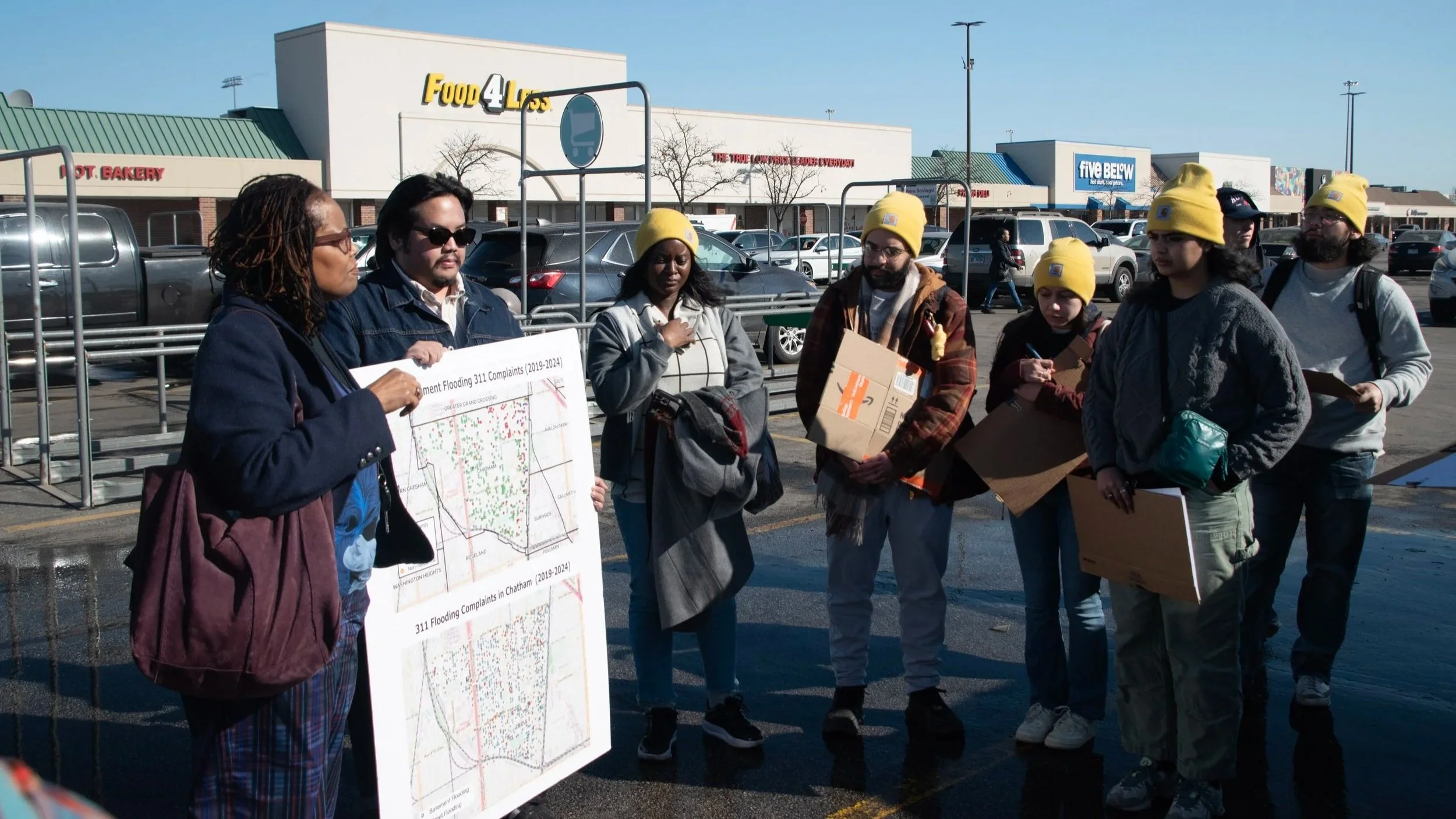
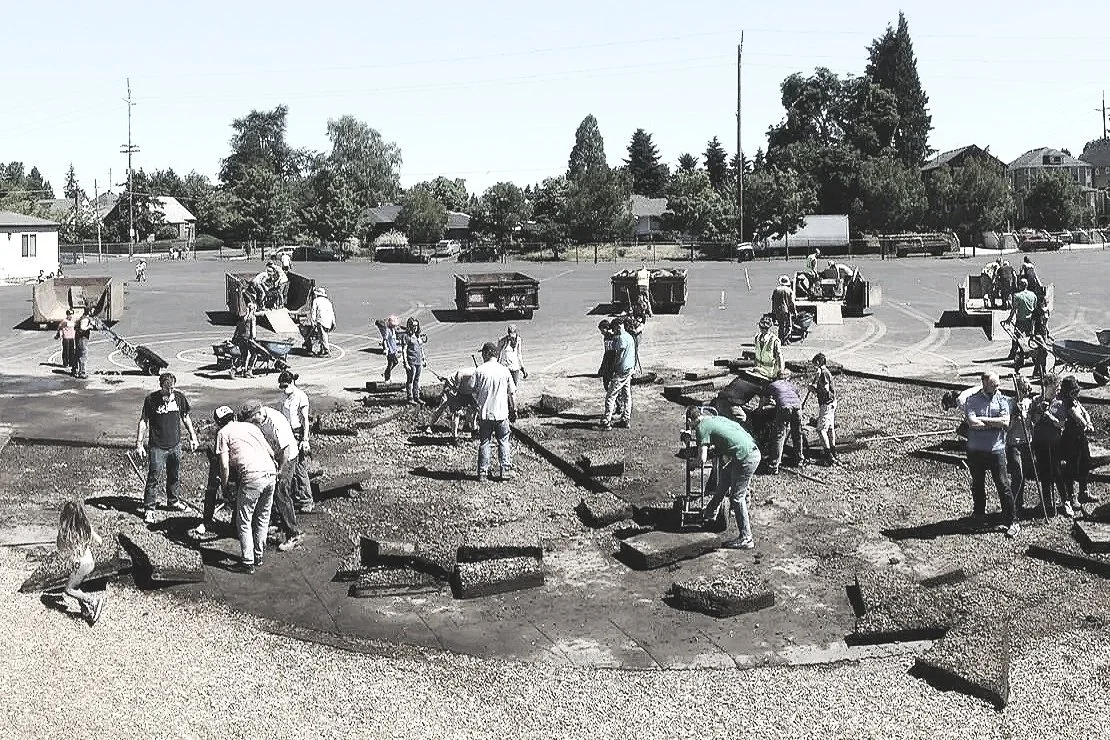
Community Depaving transforms underused pavement into parks, schoolyards, gathering spaces, gardens, and landscapes designed with communities.
Approximately one-third of Chicago's land surface is paved.
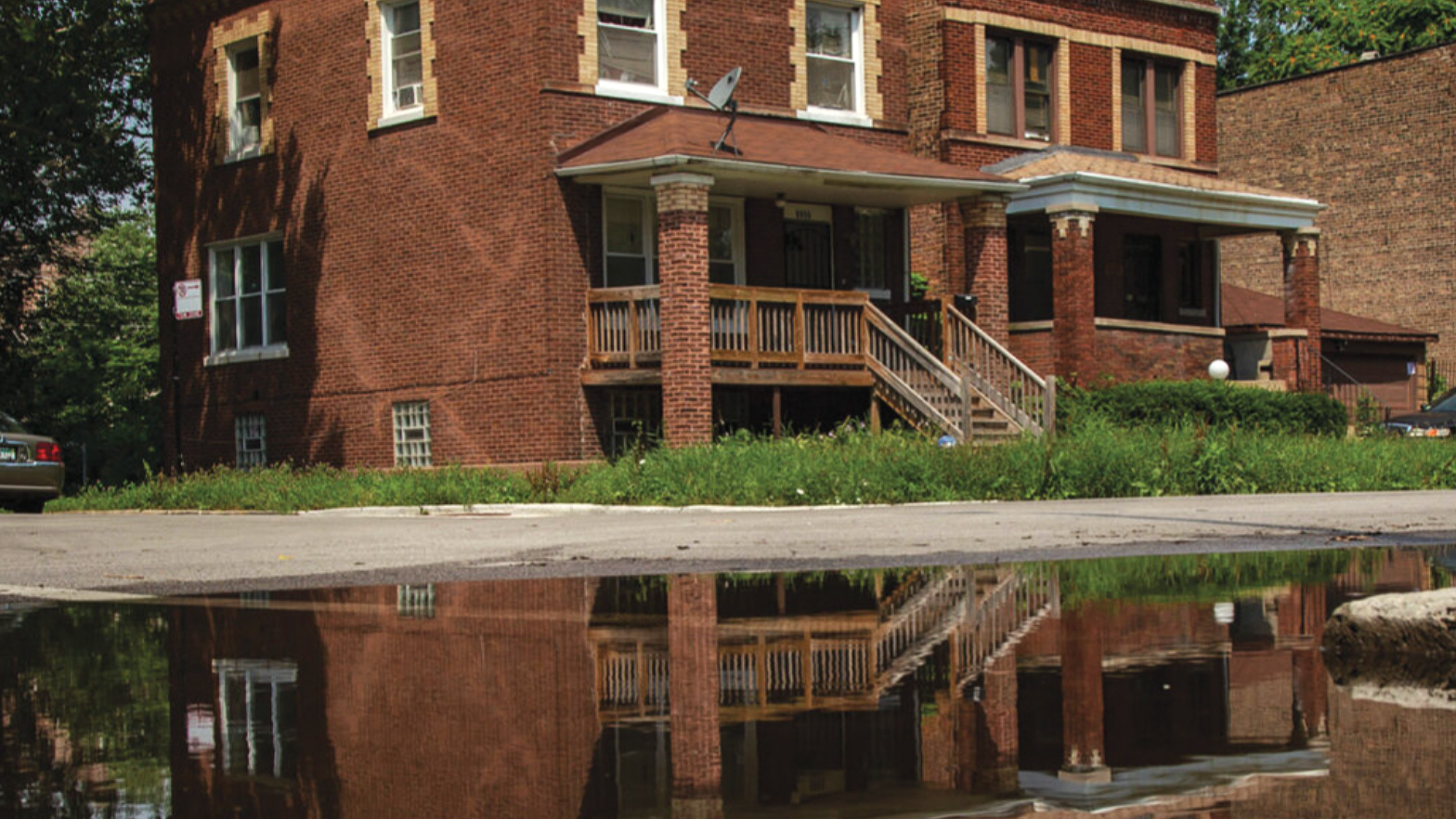
Imagine if excess pavement becomes forests, rain gardens, playgrounds, pollinator habitat, and community gathering spaces. That opportunity is what drives our work. Every square foot of pavement removed creates new possibilities—for cleaner water, cooler neighborhoods, healthier ecosystems, and stronger communities.
We are building a movement, from the ground up.
Depave Chicago works alongside communities, researchers, designers, governments, and volunteers to remove unnecessary pavement and transform it into landscapes that improve climate resilience, ecological health, and neighborhood well-being. We are not simply removing pavement. We are building the knowledge, partnerships, and policies needed to make depaving a standard practice throughout Chicago and beyond.
We believe in:
RELATIONSHIP BUILDING. We commit to initiating projects and partnerships in ways that honor and create genuine reciprocity. Through deep listening we aim to build trust and create processes for everyone to participate fully from the very beginning.
COLLECTIVE PROCESS. Together with partners, we cultivate shared knowledge, resources, and capacity. We continuously learn and refine our approaches, and embrace transparent and iterative ways of working together.
TRANSFORMATIVE PURPOSE. We design and implement community-based projects that reimagine and vitalize community health, public space, and urban land. These transformations accrue over time and we hope they inspire others to take action.
LAND AS OUR MEDIUM. Our work is rooted in care for the land, honoring local knowledge, regenerative design, and reconnecting people with nature. We emphasize a dedication to the land and care for communities through attention to place.
THE LONG-TERM. We are dedicated to creative and careful planning to sustain this transformative work together long into the future. We navigate challenges together, adapt as needed, and celebrate successes together.
We’re thrilled to collaborate with The Montessori School of Englewood (TMSOE) to implement a groundbreaking pilot project. We believe schools are uniquely positioned to raise the flag on the issue of pavement as trusted community learning spaces where education, community life, and environmental action intersect. TMSOE is transforming its asphalt campus into a climate adaptation hub that launches a citywide depaving movement through education, partnerships, and community leadership.
Your donations will help pay for implementation of the project, including depaving workshops, trainings and education programming!
Thank you in advance for your support.
Support Our Pilot Project

DEPAVE CHICAGO PARTNERS & SUPPORTERS
The start-up of Depave Chicago was funded by a Resilient x Nature Grant from the Walder Foundation. Depave Chicago is founded and managed by Professor Mary Pat McGuire in the Department of Landscape Architecture at the University of Illinois Urbana-Champaign (UIUC). Our location in the downtown Chicago Studio is generously provided by the College of Fine & Applied Arts and School of Architecture, UIUC.
We give special thanks to Katya Reyna and Ted Labbe of Depave (Portland) whose mentoring and teaching laid the groundwork for our program and fuel our ethos and passion for this work. Katherine Rose, Malena Marvin and numerous Depave board members continue to provide critical guidance and collaboration on our pilot project - we could not do it without them!
We’re also grateful to organizations across the Chicago region who have supported the start-up of Depave Chicago; these include: Chicago Region Trees Initiative at the Morton Arboretum, Environmental Law & Policy Center, Greater Chicago Watershed Alliance, Calumet Stormwater Collective, Metropolitan Water Reclamation District of Greater Chicago, Neighbors for Environmental Justice, Openlands, Trust for Public Land, US Forest Service - Chicago Region, Nordson Green Earth Initiative, Red Oak Rain Garden (University of Illinois), the Farnsworth Group, and Urban Rivers (home to Wild Mile).
Land Acknowledgement
Depave Chicago, located in Chicago, Illinois, sits on the unceded lands of the Council of Three Fires, the Odawa, Ojibwe, and Potawatomi Nations, as well as the tribes of the Miami, Ho-Chunk, Menominee, Sac, Fox, Kickapoo, and Illinois Nations. Controlled occupation of these lands through land cessions and forced removal of Indigenous people occurred through the Treaty of Greenville (1795), the Treaty of St. Louis (1816), and the Indian Removal Act (1830). The histories of Indigenous peoples and all communities throughout the Chicago region must be acknowledged in the work of Depave Chicago. We must honor and celebrate traditions and care for the land and the waters of the region. And we must contribute to the work of restoring relationships among land, water, people, and all living species and entities of the region for remaining Indigenous communities and for all people who live here.