
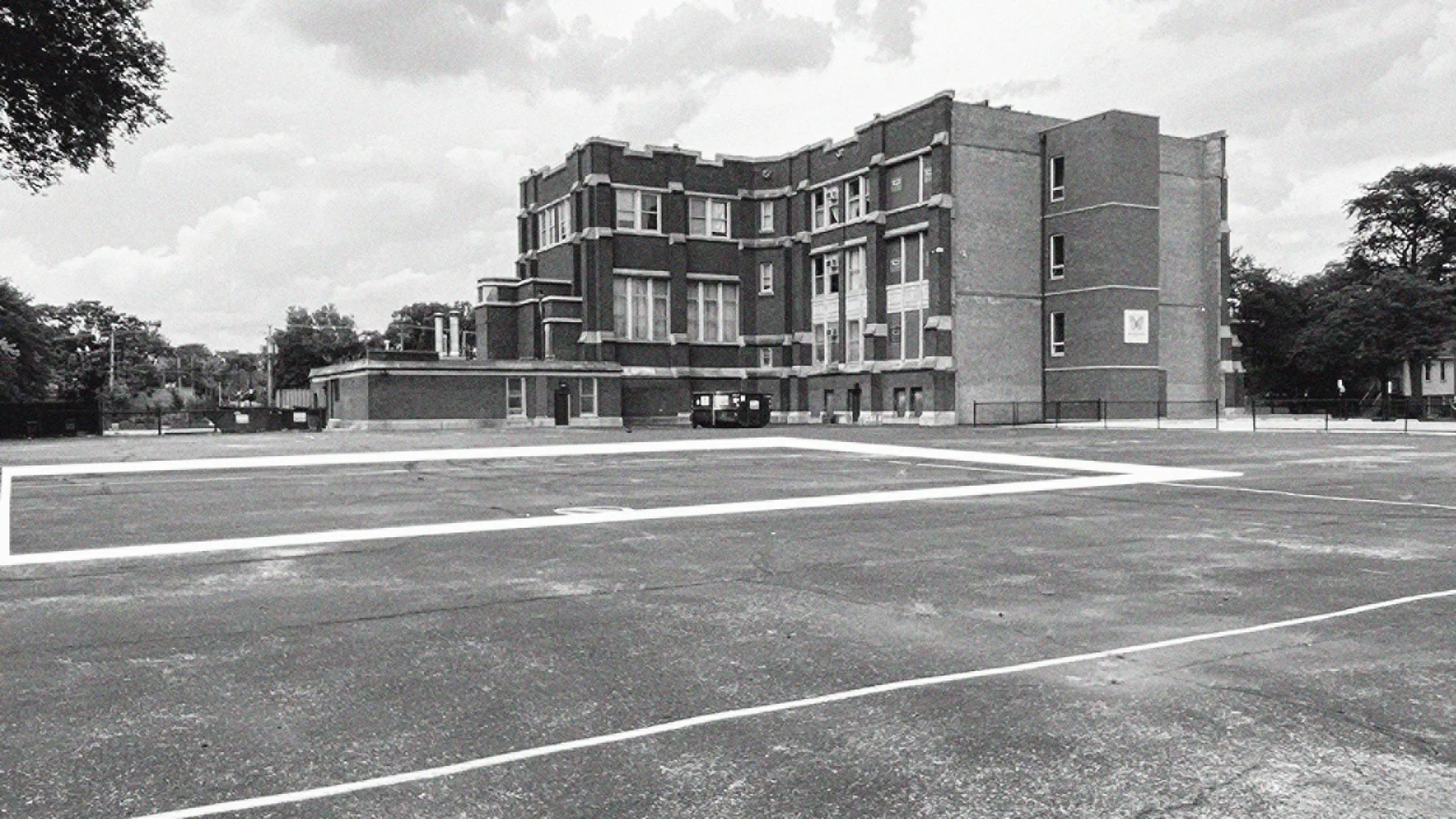
Pilot Project for Chicago: The Montessori School of Englewood
THE MONTESSORI SCHOOL OF ENGLEWOOD
CHICAGO, IL
2023 - ONGOING, IN FUNDRAISING
We’re thrilled to collaborate with The Montessori School of Englewood (TMSOE) to implement a groundbreaking depaving pilot project together. TMSOE, a non-profit charter school of 420 K-8th grade students, teaches the Montessori method of child-centered education and hands-on learning, with a focus on empowerment and creating the next generation of leaders in Chicago and beyond. With a focus on environmental justice and climate adaptation, TMSOE has long desired to remove the asphalt to transform the site into a living, environmental education, and community gathering space. This climate adaptation hub will launch a citywide depaving movement through education, partnerships, and community leadership.
In Spring 2023, 6th, 7th, and 8th graders along with their teachers, parents, and board members collaborated with Depave Chicago to develop a Vision Landscape Transformation Plan for the green schoolyard. The design includes butterfly and pollinator gardens, an outdoor classroom, an art-making space, nature-play areas with low-berms and log structures, a remembrance garden, a rainwater celebration and bio-infiltration feature, and lots of shade trees. We’re working with Depave.org to learn how to remove the asphalt ourselves, providing a replicable process for future communities to remove unnecessary asphalt and transform those spaces for their residents, nature, address flooding and heat, and improve community benefits.
TMSOE Steering Committee:
Felicia Lang, Chief Strategy Officer
Maggie Mikuzis, Chief Operations Officer
Rita Nolan, Executive Director
La Kiesha Dunn, Outreach and Programs Coordinator
Cal Barksdale, Fundraising
TMSOE Creative Working Group: Candace Rogers, Ebonie Townsend, Vicky Coleman-Cox, Jonathan Howell, Lynetta Denson, Vicki Bowens, Tina Rush, Caleb Wagner, and students: Kahmani Hester, Armani McLaurin, Alexander Jones, Brandon Littleton, Melany Renderos, Jade Nutall, Jazmynn Thomas, Leah White, Asia Starling, Trinity Crockett, and Ceonna Black.
Consulting Partners:
Katya Reyna, Co-Director, Depave, Portland, Oregon: Ted Labbe, Co-Director, Depave, Portland, Oregon; Stacey Libra, Indigo Ecological Design, Landscape Architect; Jenna Andresen, Indigo Ecological Design, Landscape Architect; Rebecca Helfrich, Geosyntec Consultants, Civil Engineer; Lee Hauser, Geosyntec Consultants, Civil Engineer
Depave Chicago
Mary Pat McGuire, Sarah Hanson, with Graduate Research Assistants Vidhan Goel, Sierra Chmela, Julien Gundry
Funders: The Walder Foundation, individual donors
CLIENTS & COLLABORATORS
Currently in fundraising to complete the construction of this project. Please check back for updates!
AWARDS & NEWS
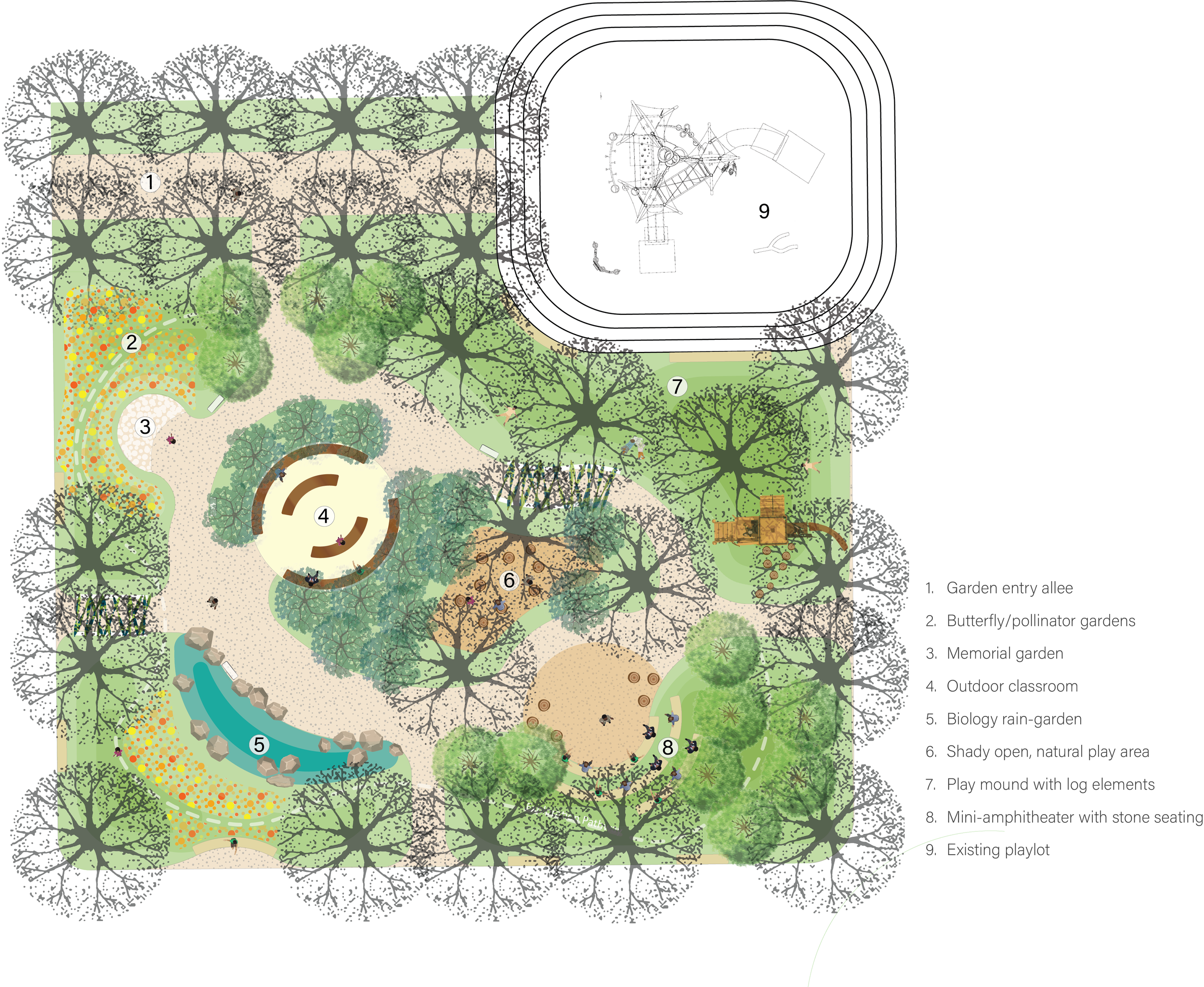
Urban Regeneration: The Depaving and Greening of The Montessori School of Englewood is essential care for a broad community of students, families, and surrounding residents. The landscape plan creates safety, comfort, well being, while restoring soils, embracing rainwater, regenerating nature, and inviting pollinators, birds, and small animals to inhabit the site.
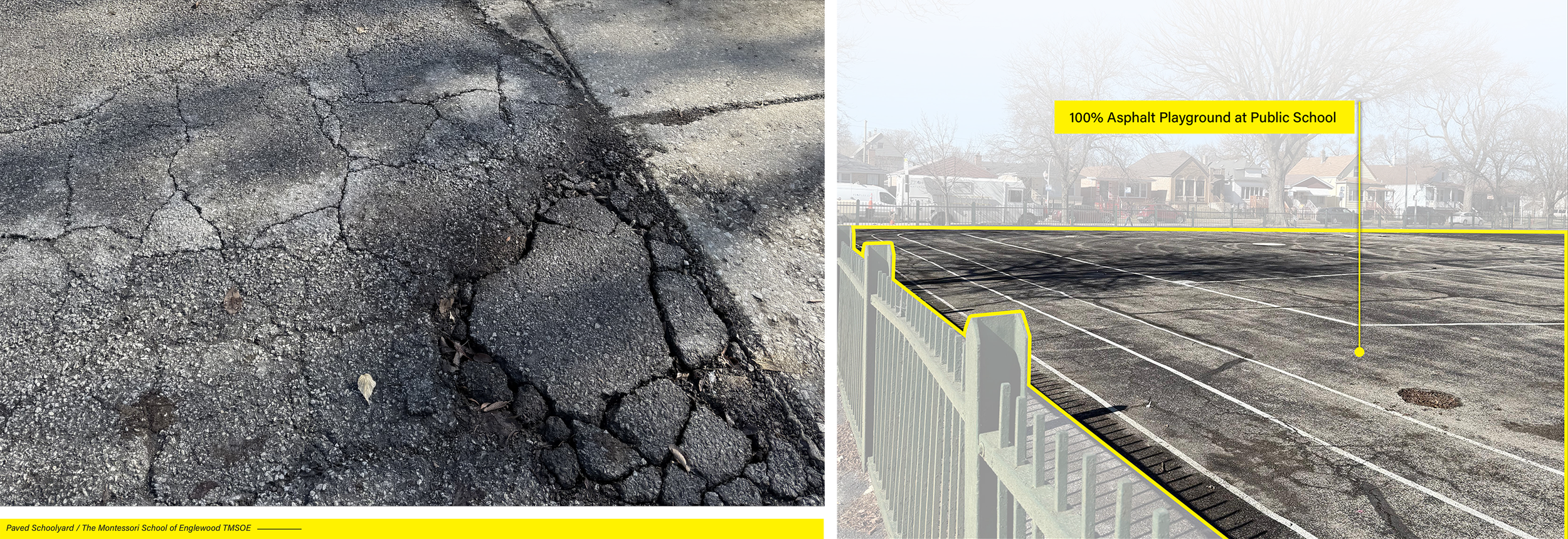
Asphalt Harms: Too many kids play on asphalt, spending time on heated surfaces, hurting themselves such as breaking bones and hitting their heads on pavement when they fall. Research demonstrates that kids need soft surfaces to run and play, protection by tree shade, to interact with plants, learning about the cycles of nature and ecology, to breathe clean air, and to find restoration from the stress of life.
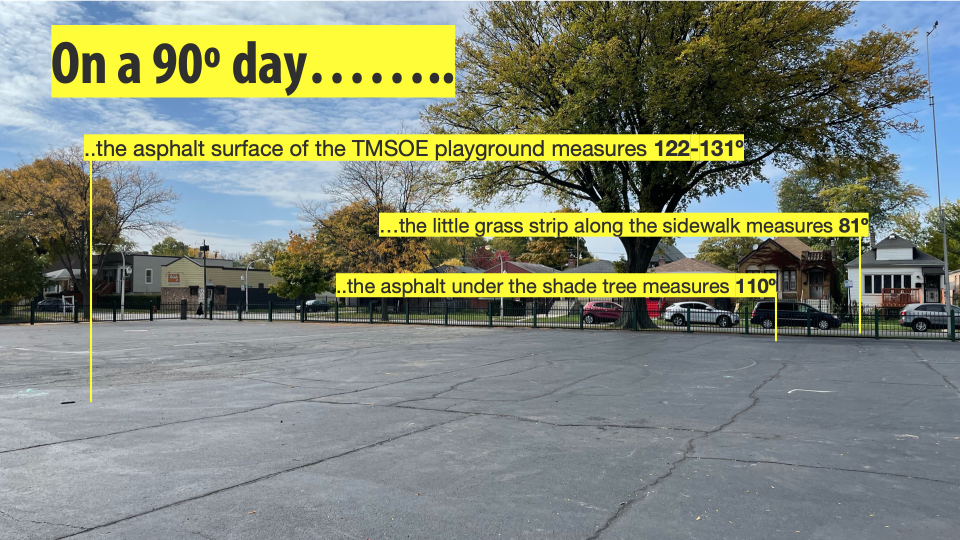
Heat and Run-Off: On a 90-degree day, the surface of asphalt reaches 125-degrees, dangerously hot for our kids to be playing on. Notably, one quarter-acre of asphalt contributes 270,000 gallons of rainwater into the municipal sewer system.
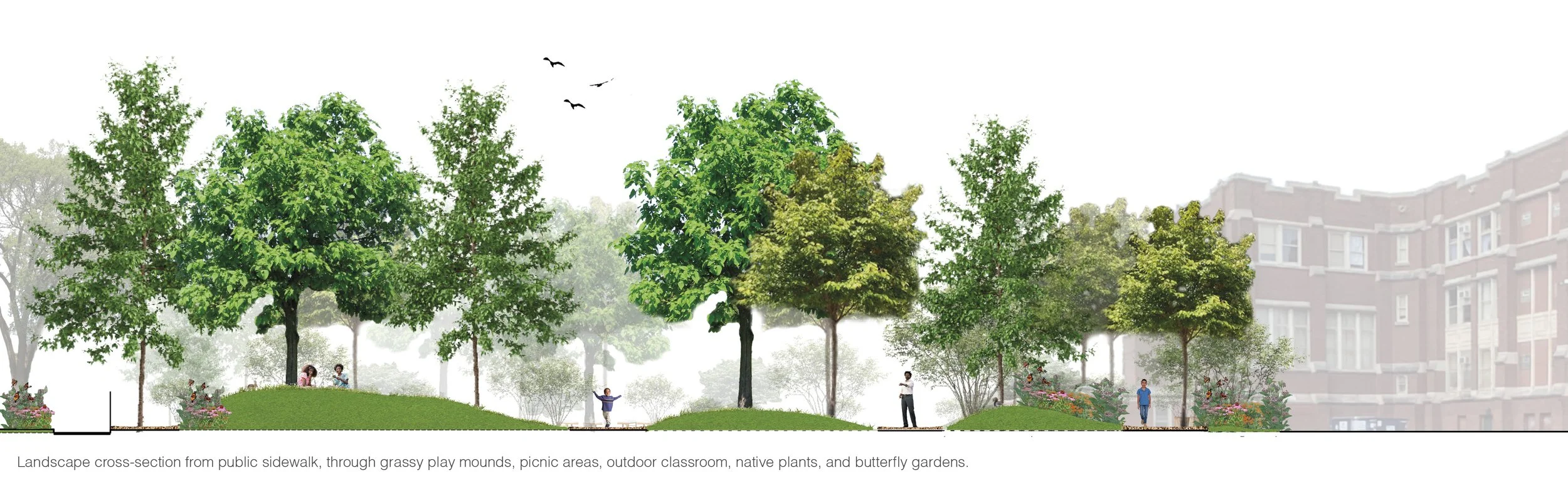
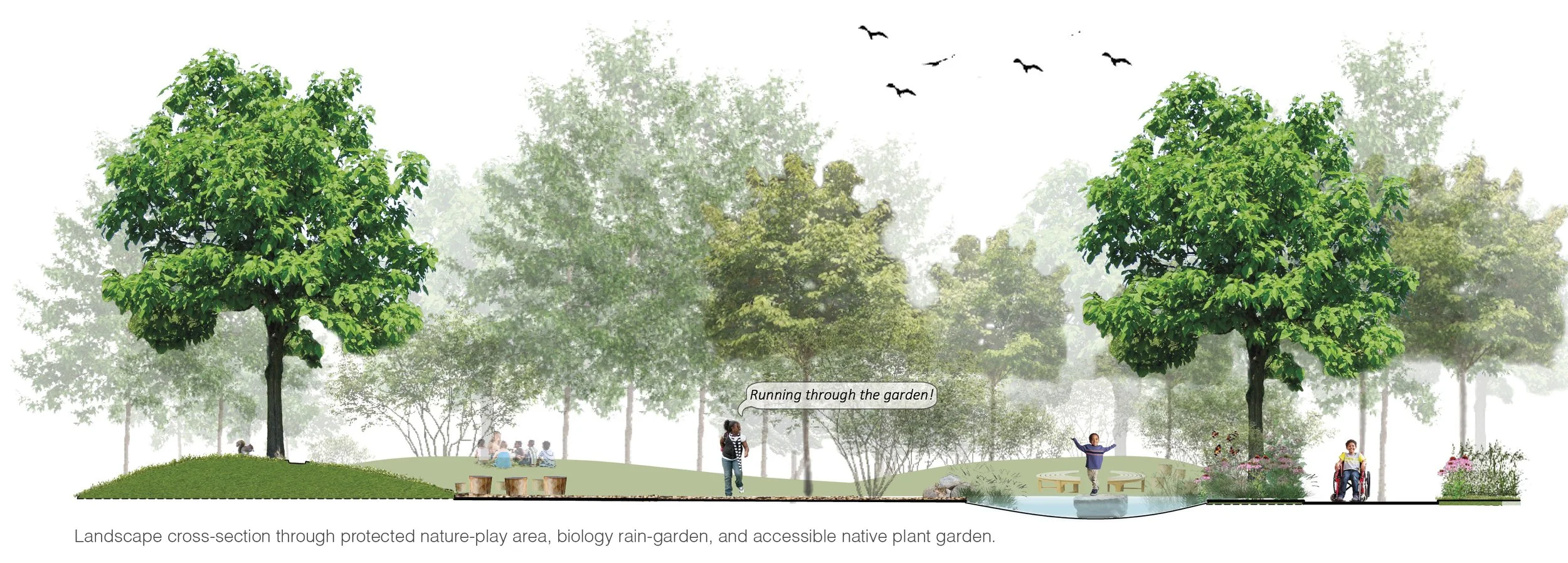
Landscape Fullness: The TMSOE schoolyard is full with spaces designed for restorative and educational experiences. The ground is transformed to 85% soils-based gardens and 15% permeable and accessible paths. Specific features for rainwater include: 260’ of bioswales, a 1,220-square foot biology rain garden, two types of porous pavement (permeable pavers and a porous stabilized decomposed granite, 3,000-square feet of bio-habitat gardens with nature trees shrubs, and perennial plants.
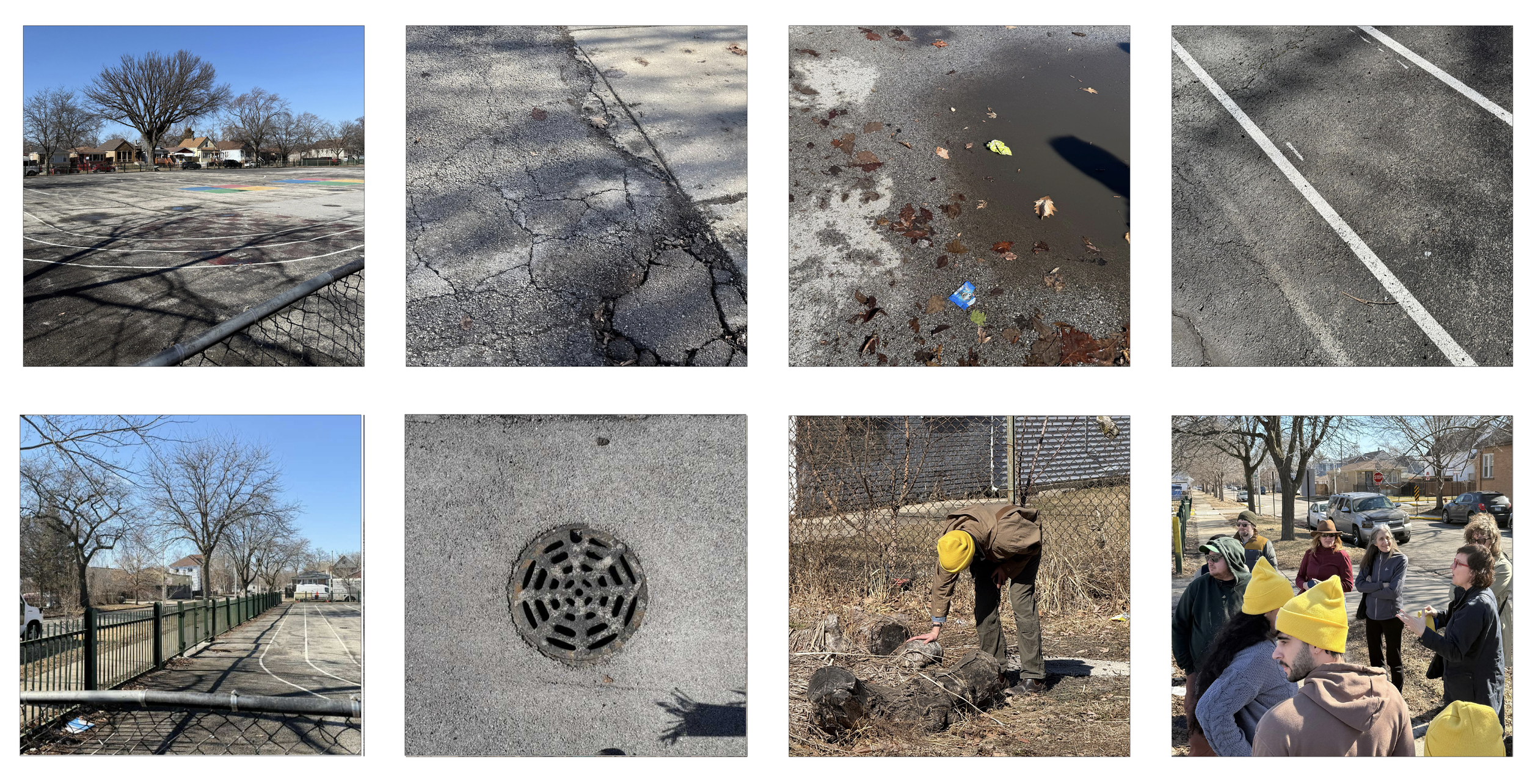
Dimensions of the site: Conditions across the site, observed during a Pavement Tour visit in February 2026. [Photos by Manny Castro]
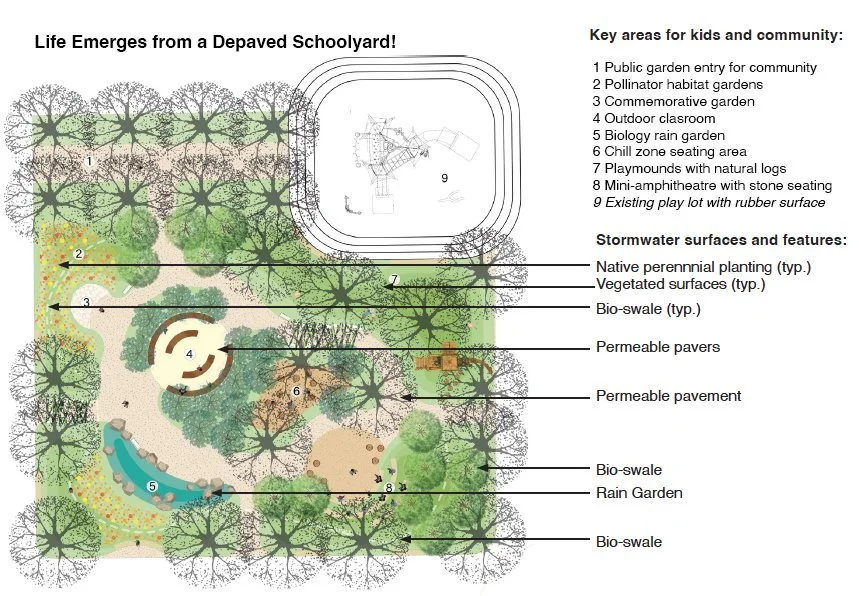
Transformation & Elements: The TMSOE schoolyard is full with spaces designed for restorative and educational experiences. The ground is transformed to 85% soils-based gardens and 15% permeable and accessible paths. Specific features for rainwater include: 260’ of bioswales, a 1,220-square foot biology rain garden, two types of porous pavement (permeable pavers and a porous stabilized decomposed granite, 3,000-square feet of bio-habitat gardens with nature trees shrubs, and perennial plants.
Student Empowerment: “That’s what’s really important about this project. When Mary Pat came on, she had our students engage in what they wanted to see in the playground. That’s very important to our mission – that’s how students take ownership of the land and that [kind of] ownership is what transforms how they view themselves and their experience of the world around them.”
[Video taken by Noor Kamal]
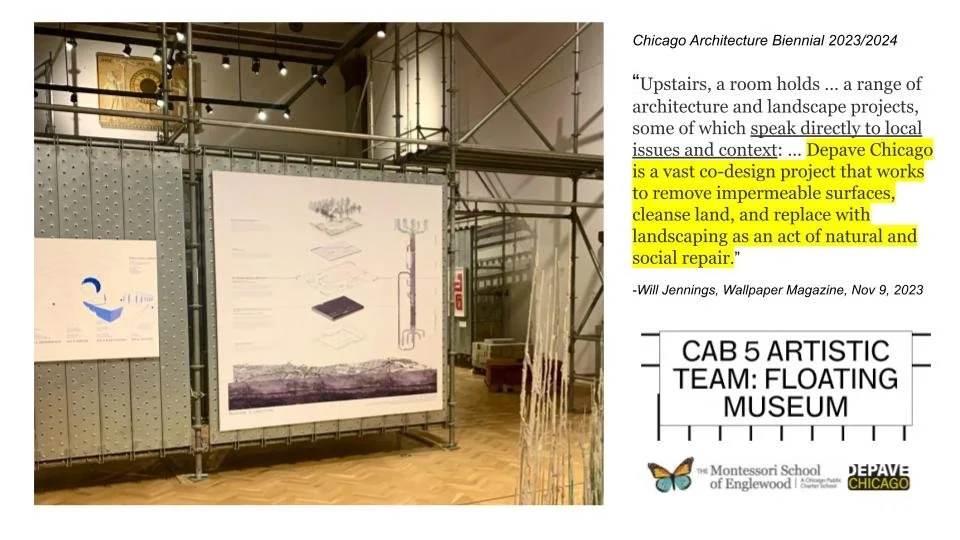
Chicago Architecture Biennial: In 2023, TMSOE and Depave Chicago were invited to exhibit the Depave/Greening transformation project at the 5th Chicago Architecture Biennial. The curators identified it as a perfect example of the city always in an act of becoming. They also noted that the project is the first one that doesn’t just add new elements to a site, but makes a transformation by taking something harmful away.
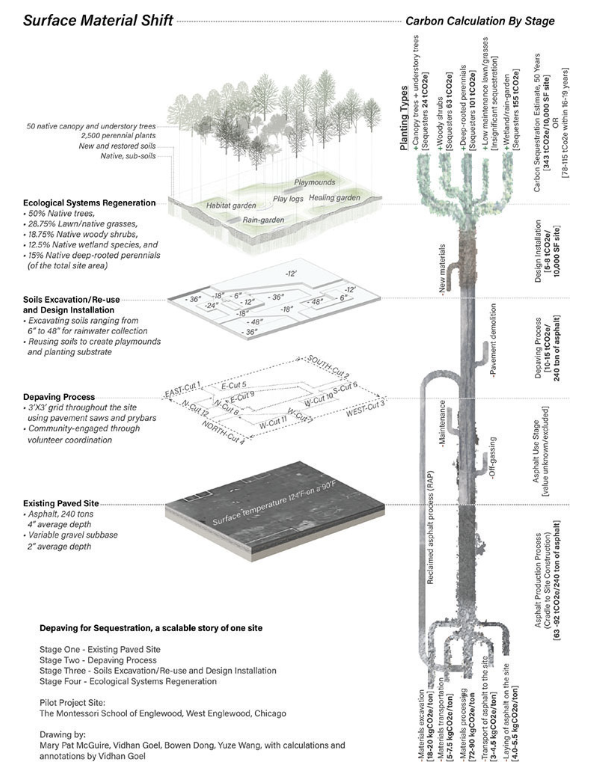
Depaving & Carbon Sequestration: We also assessed the carbon sequestration value of depaving a quarter-acre of asphalt and replacing that with a nature-based design. The restoring of soils and planting of native trees, grasses, woody shrubs, wetland species, and deep-rooted perennials will sequester up to 428 tCO2e in the next 50 years. We calculated that the life of a child is all it takes to reverse course on pavement-related emissions. Taking into account the carbon emitted by producing the asphalt in the first place, it will take 16 years to offset that carbon. Let’s go!